
Replica vs Genuine Datejust: What Feels Different After a Full Day on the Wrist?
Replica vs Genuine Datejust: What Feels Different After a Full Day on the Wrist?
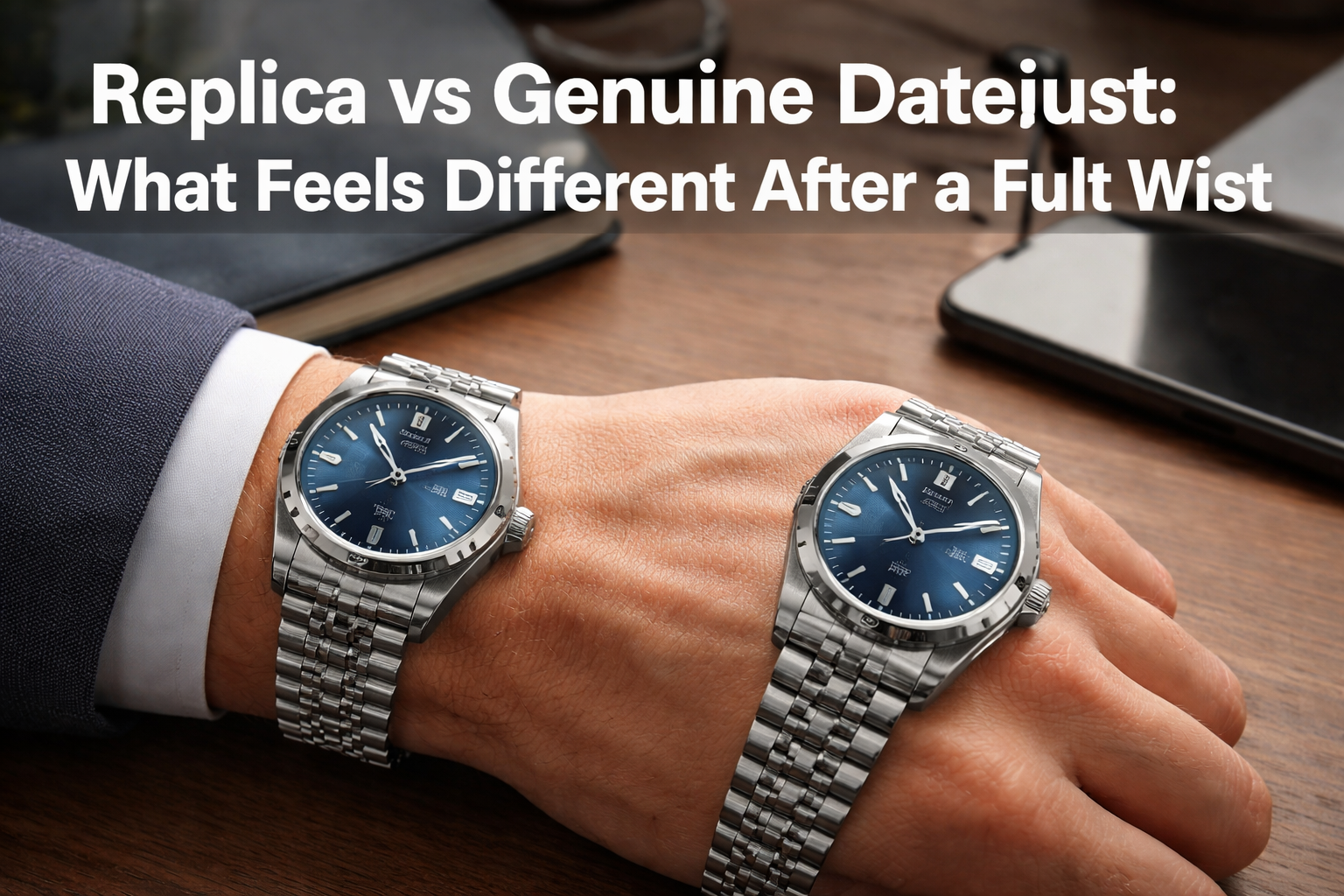
Quick Answer
A replica Datejust and a genuine Datejust can look surprisingly similar in photos or at a quick glance, but after wearing both for a full day, the differences usually become easier to feel than to see. The biggest changes often show up in bracelet comfort, weight balance, case edge finishing, dial depth, and how naturally the watch disappears into daily wear.
In other words, this is not just about “spotting differences.” It is about how the watch behaves when you are typing, walking, sweating a little, checking the time under office lighting, and wearing it long enough to stop thinking about it.
Why This Comparison Matters More in Real Life Than in Photos
A lot of buyers make their judgment too early.
They look at product photos, a wrist shot, or even a short side-by-side video and assume they already know enough. But watches are not only visual objects. They are worn objects. A Datejust especially is the kind of watch people choose because it is supposed to feel easy, balanced, and natural in daily life.
That is why a full-day wear test tells you more than a close-up photo ever can.
A watch can look clean in pictures and still feel slightly off after six or eight hours. Sometimes the problem is not obvious at first. It shows up slowly: the bracelet feels less fluid, the case sits a little stiffer on the wrist, or the watch has a presence that feels more “object-like” than effortless.
That is also why articles about visible craftsmanship details are useful, but they only tell part of the story. If you have already read our guide on how to evaluate watch craftsmanship, this article takes the next step and focuses on what those details actually feel like in real daily use.
The First Hour: At First, the Gap May Feel Smaller Than Expected
The interesting part is that during the first 30 to 60 minutes, the difference may not feel dramatic.
When you first put on a Datejust-style watch, most of what you notice is broad and obvious:
- the size
- the dial color
- the bracelet style
- whether it matches your outfit
- whether it feels too shiny or too quiet
If the replica is visually decent, the first impression can be convincing enough. That is why many people initially think the comparison is mostly about appearance.
But once the watch becomes part of your routine, smaller details start separating themselves.
You stop looking at the watch and start living with it.
That is where the real difference begins.
What Starts to Feel Different After a Few Hours
1. Bracelet Comfort and Movement
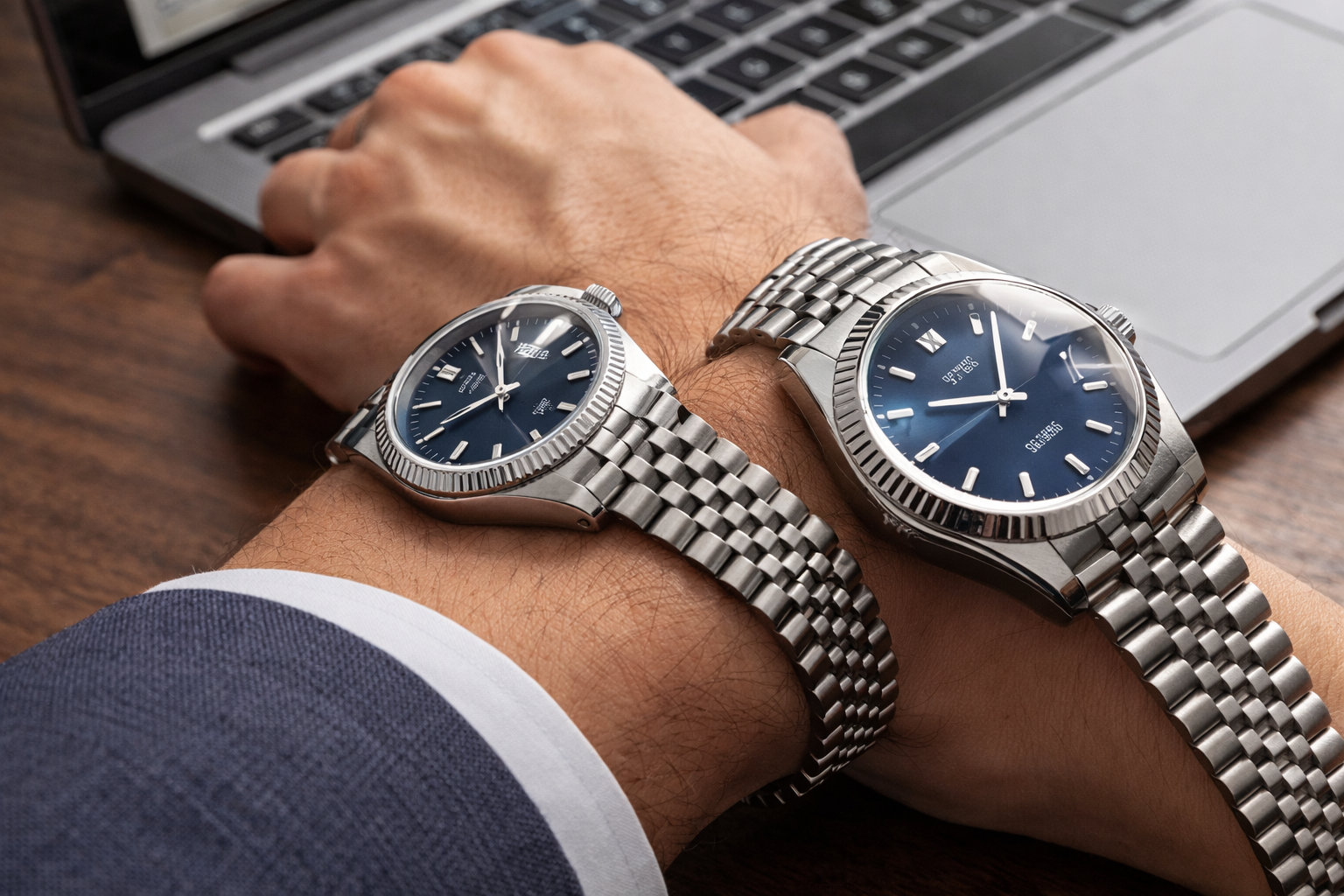
This is usually one of the biggest differences over a full day.
At first, many bracelets feel acceptable. But after a few hours, you begin noticing how the links move when your wrist bends, how smoothly the bracelet settles after motion, and whether it keeps a comfortable shape without feeling stiff or slightly loose in the wrong places.
A genuine Datejust bracelet often feels more settled and more predictable throughout the day. It tends to move with less distraction. Nothing fights your wrist. Nothing asks for attention.
With a replica, even when the bracelet looks close visually, the long-wear experience can feel different in small ways:
- slightly less fluid link articulation
- a more noticeable shift in weight when the wrist turns
- minor pinching or friction near the clasp area
- a bracelet that feels fine standing still but less natural while moving
These are not always dramatic flaws. In fact, they are often subtle. But subtle is exactly what matters in an everyday watch.
This is also why bracelet style alone does not tell the full story. We have already covered whether a bracelet always looks more expensive in Does a Watch on a Bracelet Always Look More Expensive Than One on a Strap?, but comfort and articulation are a separate issue. A bracelet can look premium and still not feel truly easy over a full day.
2. Weight Balance, Not Just Weight
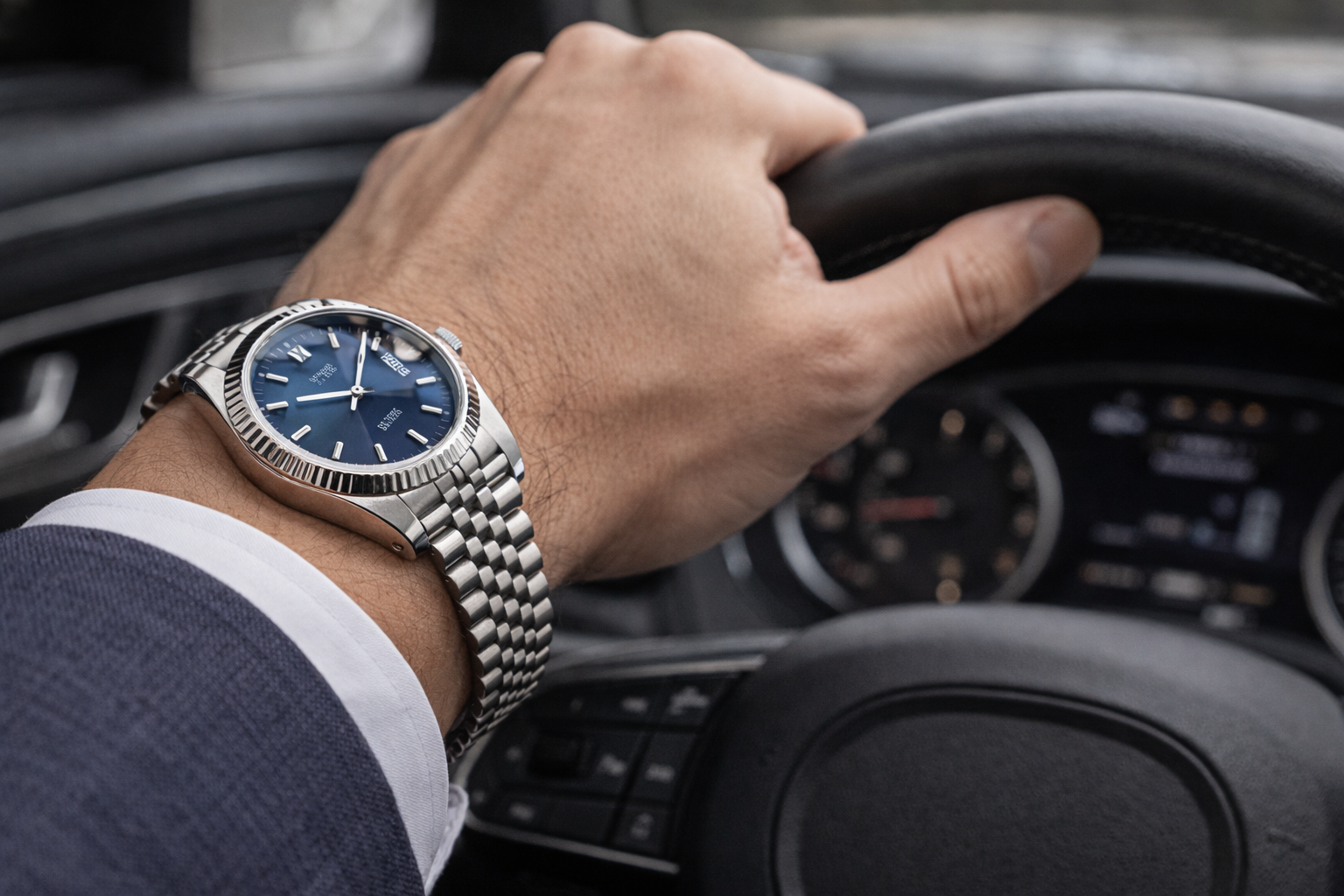
A lot of people focus too much on total weight.
But in real wear, balance matters more than the number on paper.
A genuine Datejust often feels centered. The watch head and bracelet work together in a way that makes the watch feel stable without feeling heavy. It does not constantly remind you that it is there.
A replica may be close in total weight and still feel less natural because the balance is slightly off. Sometimes the watch head feels a touch more top-heavy. Sometimes the bracelet does not counter the case as smoothly. Sometimes the watch shifts position more often during ordinary motion.
You especially notice this during normal daily situations:
- typing at a desk
- reaching for a steering wheel
- carrying a bag
- walking outside for 20 to 30 minutes
- taking the watch under and out of a shirt cuff repeatedly
That is why a watch can feel more tiring over time even if it does not feel objectively heavy.
If you have ever wondered why two apparently similar watches can wear very differently, that is exactly the same logic we explored in Why Two Similar Watches Can Feel Completely Different in Daily Wear.
3. The Way the Case Sits Against the Wrist
This is another difference people often underestimate.
A Datejust is not supposed to wear like a tool watch or a large sports watch. Its appeal partly comes from how easily it integrates into daily clothing and daily motion. The case should feel present, but not intrusive.
On a genuine model, the case often feels smoother in its transitions. The edges, underside contact, and general shape tend to create a more settled fit across the wrist over long wear.
On a replica, the case may still look good from above, but the wearing sensation can become slightly less refined as the day goes on. This can show up as:
- the case feeling a little flatter or less organic against the wrist
- edges that feel visually fine but slightly sharper in use
- a wearing experience that becomes more noticeable under cuffs
- less natural comfort when the wrist is bent for long periods
This matters even more in office use, where a watch spends hours in repeated micro-movements rather than dramatic action.
4. Dial Depth and the “Quiet Quality” Effect
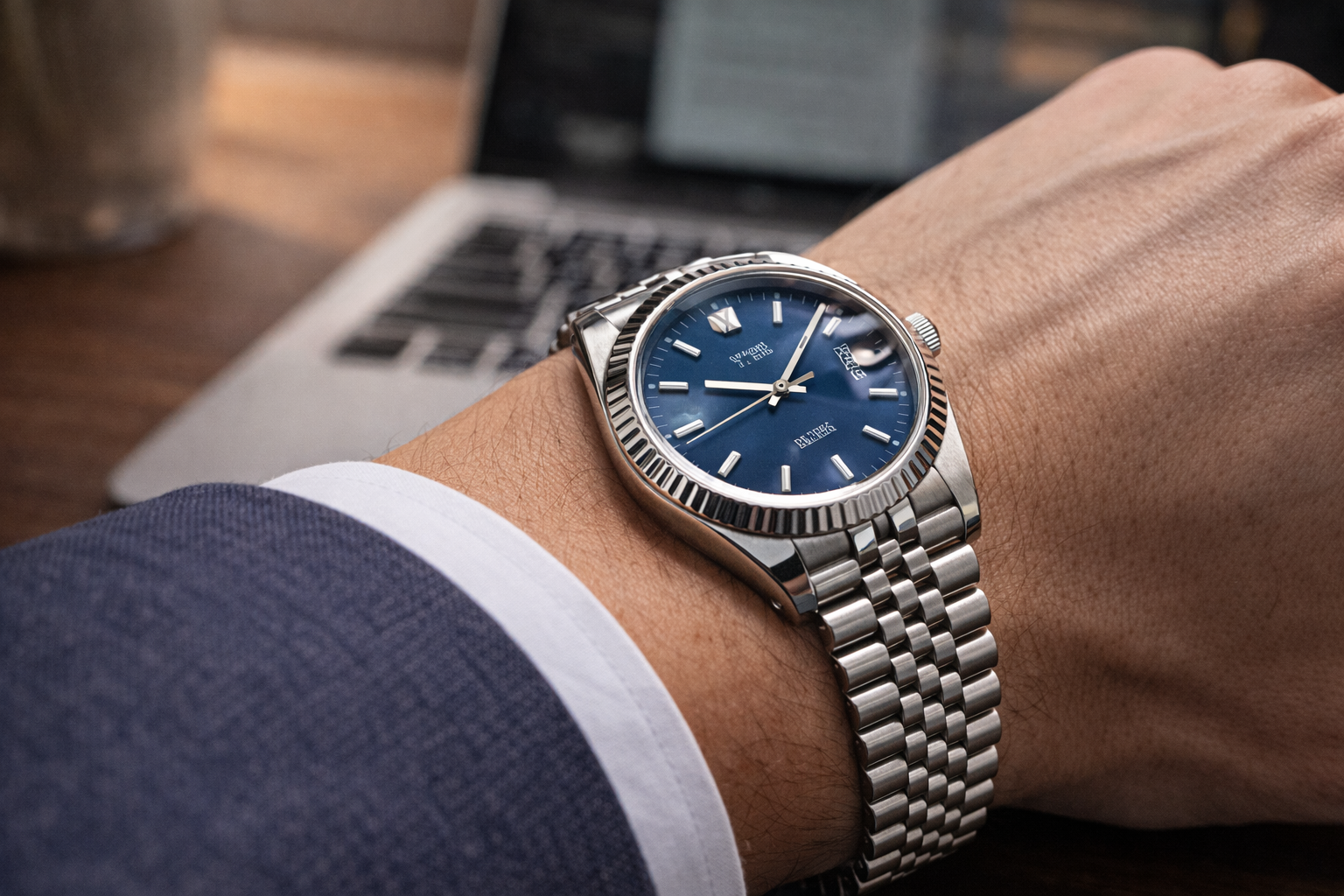
This is not always the first thing you notice, but over a full day, it starts to matter more.
A genuine Datejust often has a kind of quiet visual stability. The dial does not need to shout. Under changing light, the watch still looks composed. The markers, hands, crystal, and dial surface work together without feeling visually busy.
A replica may still look attractive, but the longer you wear it, the more you may notice that the watch feels a little less calm in changing light. This is especially noticeable in:
- indoor office lighting
- elevator mirror checks
- café or restaurant side lighting
- late afternoon natural light
- close-up time checks while working at a computer
The issue is not always that one detail is clearly wrong. It is often that the overall impression feels less deep, less stable, or slightly more surface-level.
This connects closely to what we discussed in What Do People Actually Notice First About a Watch in Real Life?. In real-world settings, most people do not inspect a watch like a collector. They absorb the total impression. Dial depth and visual calm are part of that impression.
A Real-Life Scenario: Office, Commute, and Dinner
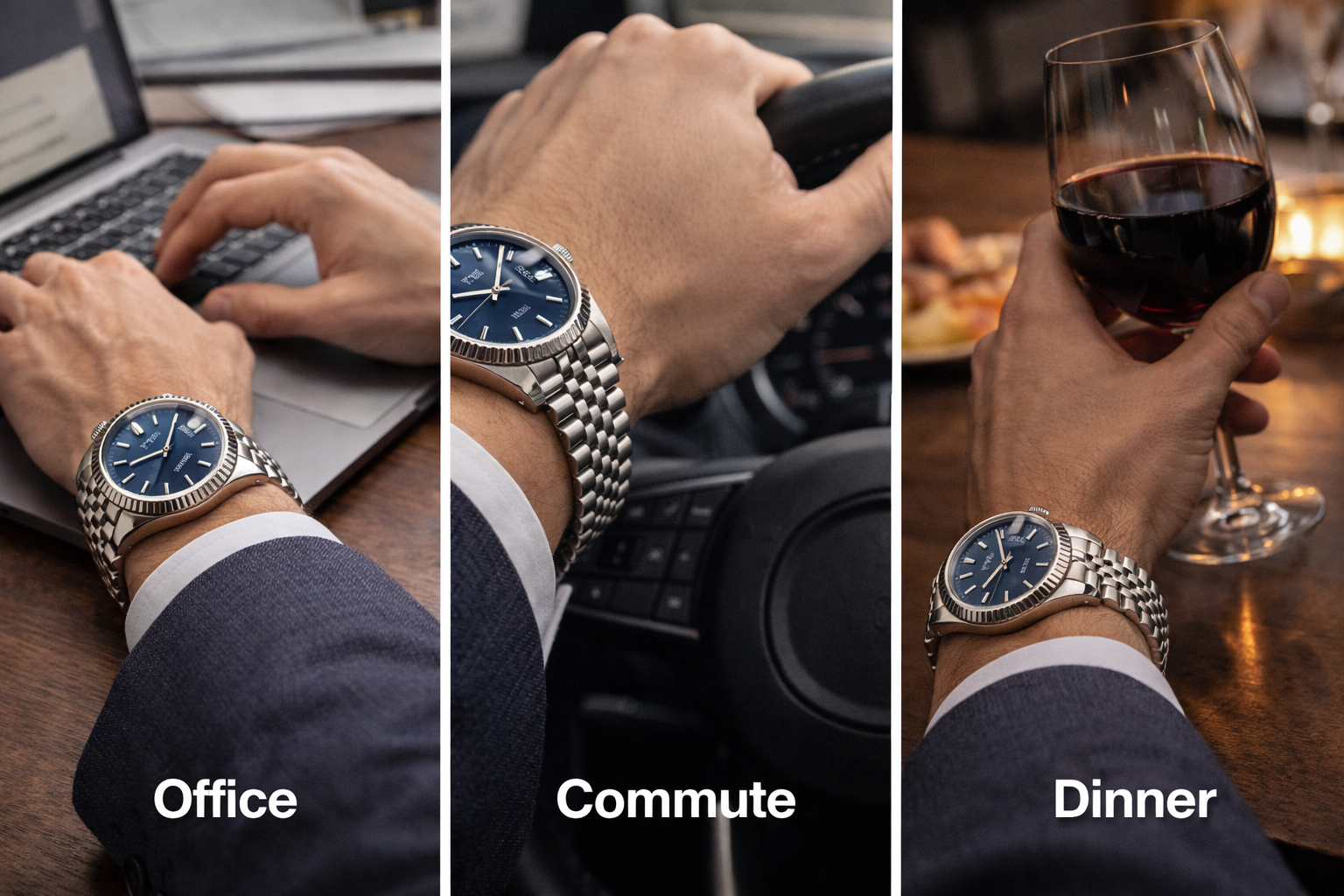
Let’s put this into a realistic day, because that is where this comparison makes the most sense.
Imagine wearing the watch from 8:00 a.m. until 8:00 p.m.
Morning commute
At this stage, both watches may still feel fine. You notice the overall style, maybe the bracelet shine in daylight, maybe how the dial catches light outdoors. If the replica is visually decent, the gap can still feel fairly small here.
Office desk work
Now the comparison becomes more honest.
You are typing, resting your wrist on a desk, adjusting your sleeve, checking the time quickly between tasks. This is where bracelet comfort, case contact, and balance become much more obvious. A watch that looked good in a mirror may start feeling slightly less natural in constant use.
Afternoon movement
After walking out for coffee or moving between meetings, the watch either continues to feel easy or begins to feel more noticeable. Genuine daily-wear comfort tends to show itself here because refinement is easiest to appreciate when you are not thinking about it.
Dinner or evening social setting
At night, the visual side returns. Under indoor light and closer conversation distance, the watch is seen differently. This is where the “overall harmony” of the piece matters. People may not know why one feels more convincing, but they often react to the total balance of finishing, light behavior, and wrist presence.
This is also why how to choose the right watch for formal occasions matters as a related topic. A watch that works all day needs to transition well between environments, not just look good in a single type of lighting.
What Buyers Usually Expect to Notice — and What They Actually Notice
Before comparing a replica and a genuine Datejust, many people expect the obvious differences to matter most:
- logo sharpness
- date font
- cyclops alignment
- dial printing
- bezel shine
Those things do matter. But after a full day, buyers often end up talking more about different things:
- how easy the bracelet feels after several hours
- whether the watch stays balanced naturally
- whether it feels smooth under a cuff
- how refined the watch looks when glanced at repeatedly during the day
- whether the watch becomes easier or harder to enjoy over time
That shift is important.
A quick comparison is about details.
A full-day comparison is about experience.
How to Judge This More Accurately Before Choosing
If you are trying to compare a replica Datejust and a genuine one in a more practical way, do not only ask, “Can people tell?” Ask better questions.
Ask these instead:
Does the bracelet still feel comfortable after several hours?
Not just in the first 10 minutes. Comfort that fades quickly is not real comfort.
Does the watch stay balanced during normal motion?
A daily watch should not keep demanding little adjustments.
Does the case feel smooth in real use?
Pay attention when typing, driving, or wearing a cuffed shirt.
Does the watch still look refined under average indoor lighting?
Not just in polished marketing images or bright natural light.
Does it become easier to wear over time, or more noticeable?
That answer tells you a lot.
If you are still learning how watch dimensions affect comfort, it also helps to revisit Does Watch Thickness Matter More Than Case Size? and What Makes a Watch Comfortable All Day? because comfort in long wear is rarely about one single measurement.
Who Will Notice the Difference Most?
Not everyone notices the same things.
You will likely notice the difference more if:
- you wear the watch for long workdays
- you are sensitive to bracelet comfort
- you often wear long sleeves or dress shirts
- you check your watch frequently throughout the day
- you care about how a watch feels, not only how it photographs
- you already own other watches and can sense differences in finishing or fit
You may notice it less if:
- you wear the watch only occasionally
- you mostly care about broad visual style
- you do not keep watches on for extended periods
- your attention is more on design than tactile refinement
That is why these comparisons can be confusing online. Two people can look at the same pair of watches and honestly come away with different conclusions because their priorities are different.
The Most Common Mistake in This Comparison
The biggest mistake is comparing a replica and a genuine Datejust like static objects instead of lived objects.
A Datejust is not really about dramatic features. It is about balance, ease, and refinement over time. That means the differences become more meaningful the longer the watch is worn.
If someone only compares:
- product photos
- close-up still shots
- short mirror videos
- a few side-by-side specs
they are missing the exact place where the real gap often appears.
The longer the wear, the more the experience starts telling the truth.
Final Thought
A replica and a genuine Datejust can look closer than many people expect in a quick visual comparison. But after a full day on the wrist, the experience often separates them more clearly than the appearance does.
The biggest difference is usually not one dramatic flaw. It is the accumulation of small things: bracelet movement, comfort under motion, case balance, light behavior, and that hard-to-fake sense of calm refinement that makes a watch feel naturally right.
That is what daily wear reveals.
And for a watch like the Datejust, daily wear is the whole point.
FAQ
Is the difference between a replica and a genuine Datejust easier to feel than to see?
In many cases, yes. A quick glance may not reveal much, but long wear often makes differences in comfort, balance, finishing, and dial behavior easier to notice.
What part feels different first during a full day of wear?
For many people, the bracelet is the first thing that starts separating the experience. Comfort, flexibility, and how the bracelet settles during motion matter a lot over time.
Does weight alone tell you which one feels better?
No. Weight balance matters more than total weight. A watch can be close in weight and still feel less natural if the case and bracelet do not work together smoothly.
Why do some watches look fine in photos but feel less convincing in person?
Because photos flatten a lot of the wearing experience. Real-life use reveals movement, comfort, edge finishing, dial depth, and how the watch behaves under changing light.
Is this comparison only important for enthusiasts?
Not really. Even non-enthusiasts can notice when a watch feels easy, balanced, and natural versus when it feels slightly distracting over a long day.
Does this matter more for a Datejust than for some other styles?
Yes, in a way. A Datejust-style watch is often chosen for everyday versatility and refined wear, so small differences in comfort and balance matter more than they might on a more casual or purely sporty design.
