
Should Your Everyday Watch Match Your Shoes or Belt? What Actually Looks Better
Should Your Everyday Watch Match Your Shoes or Belt? What Actually Looks Better
Quick Answer
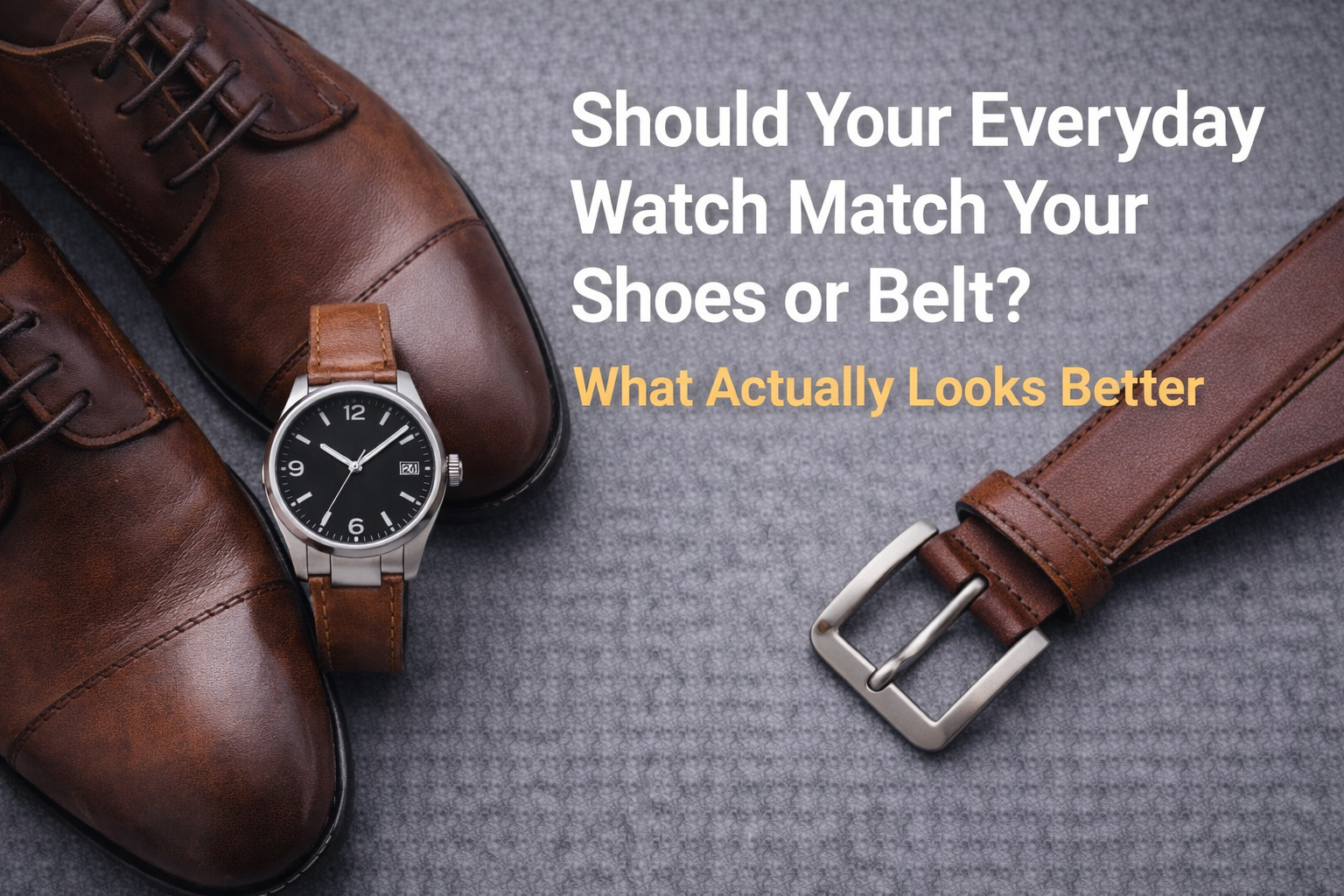
Not always. If your watch is on a leather strap, matching it loosely with your belt or shoes can create a cleaner and more intentional look, especially in smarter outfits. But for everyday wear, exact matching is usually less important than overall balance. Metal bracelet watches, black dials, and simple designs often work well without needing to match shoes or belts closely.
Introduction
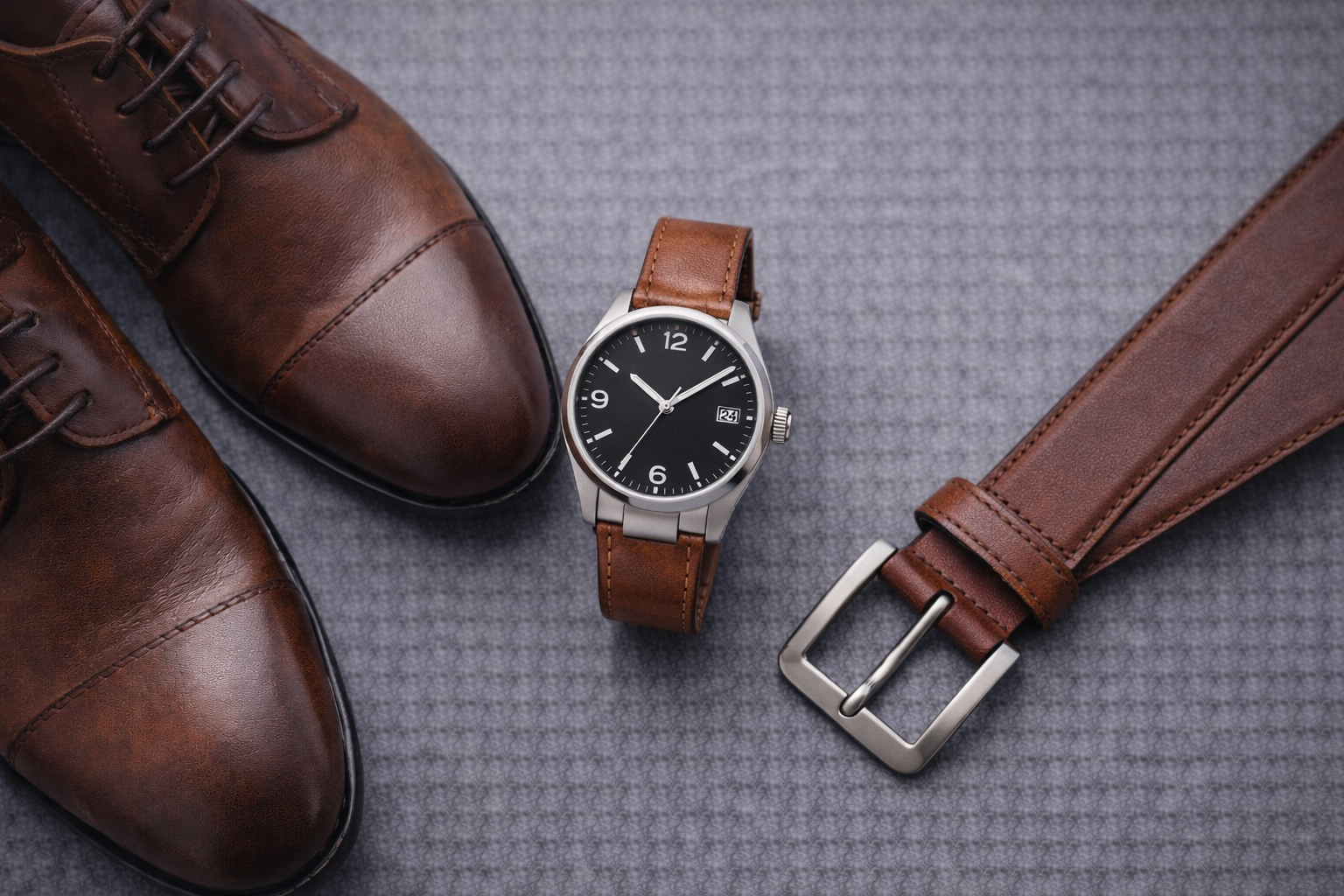
A lot of people hear the same style rule early on:
Your watch should match your shoes and belt.
It sounds clean, easy, and logical. If your strap is brown, wear brown shoes. If your strap is black, wear black shoes. If you follow that formula, your outfit should look more polished. And in some situations, that advice really does help.
But real life is usually more flexible than old style rules make it seem.
Most people are not dressing for formal events every day. They are dressing for work, commuting, weekends, dinner, travel, and mixed smart-casual routines. In those situations, exact matching is often less important than whether the whole watch feels natural with the overall outfit.
That is why this question matters.
A watch can look right without being a perfect color match. And a perfectly matched watch can still look wrong if the style, size, or formality level feels off. If you are still deciding what kind of watch works best across different settings, it also helps to read How to Match a Watch with Different Outfits and Occasions before focusing too much on strict color rules.
A Real-Life Situation Many Buyers Recognize
Imagine someone wearing a light blue shirt, dark trousers, and brown shoes.
They have two watches to choose from. One is a clean brown leather-strap watch. The other is a simple black-dial steel bracelet watch. Traditional advice says the brown leather strap should be the obvious choice because it matches the shoes and likely the belt too.
Sometimes that is true.
But in real life, the steel watch may still look just as good, or even better, depending on the rest of the outfit. It may feel cleaner, more modern, and more versatile. The brown leather watch may look more coordinated, but it can also feel more formal or more specific.
That is what many buyers start noticing over time:
Matching can help, but it is not the only thing that makes a watch look right.
1. Matching Matters Most When the Watch Is on Leather
This is where the classic advice is most useful.
If your watch has a leather strap, then matching it loosely with your shoes or belt can help the outfit feel more intentional. It does not need to be identical, but when the tones are in the same general family, the result usually looks cleaner.
Real-life example
A brown leather-strap watch worn with medium or dark brown shoes often feels naturally connected, especially with office wear, chinos, or smart casual tailoring. A black leather strap with black shoes and belt often feels more formal and sharper.
This is usually where matching makes the most visual difference.
What to check
- Is the watch on leather?
- Are your shoes and belt visually strong enough to affect the outfit balance?
- Would similar tones make the whole look feel cleaner?
This pairs naturally with Best Watch Strap Material for Everyday Wear: Leather, Rubber, or Metal?.
2. Metal Bracelet Watches Usually Do Not Need to Match Shoes or Belt
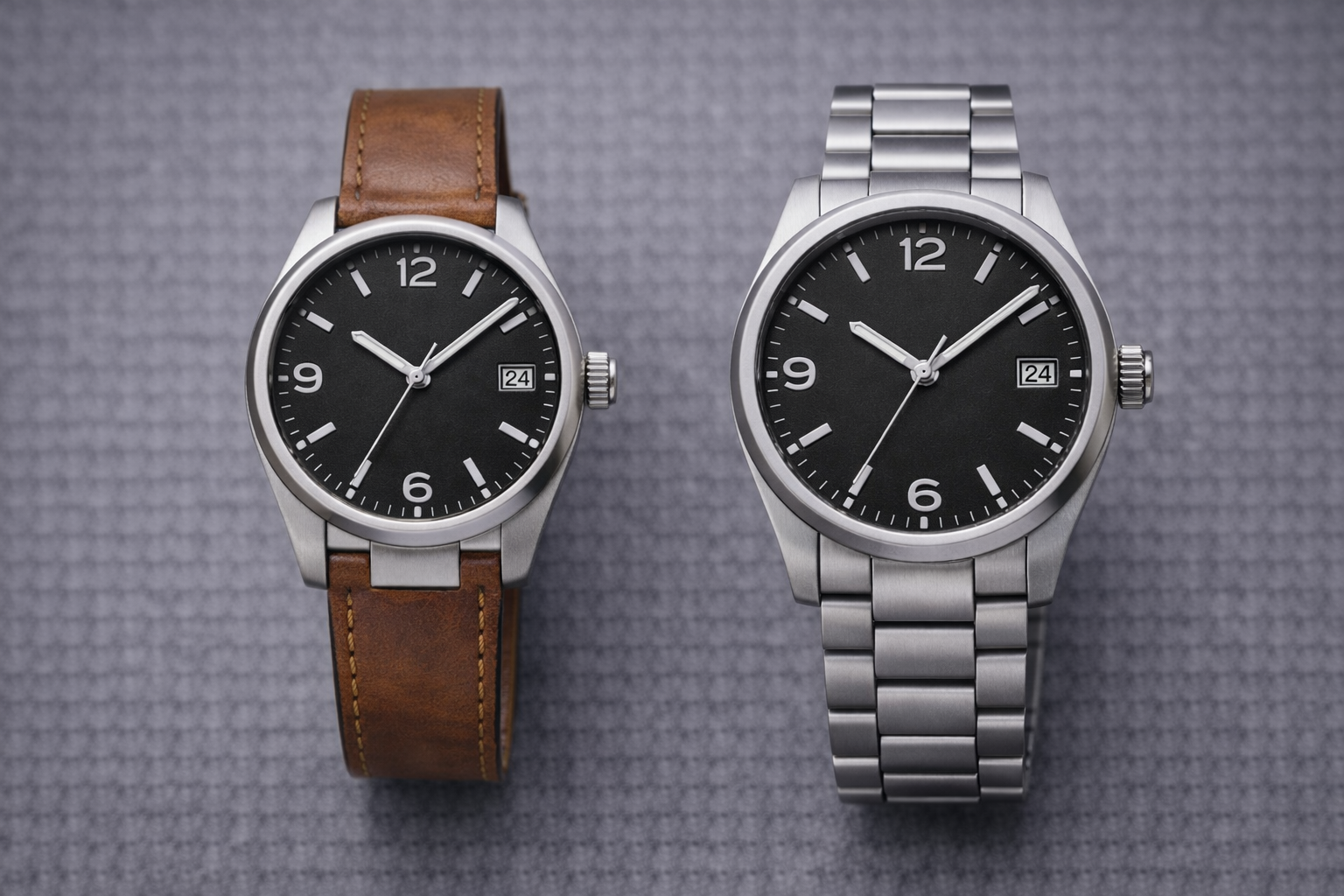
This is one of the biggest reasons metal bracelet watches are so versatile.
A steel bracelet does not belong to the same color-matching category as leather accessories in the same way. It usually acts more like a neutral. That is why a simple steel watch often works with black shoes, brown shoes, sneakers, casual outfits, and office clothing without much trouble.
Real-life example
Someone wears a stainless steel black-dial watch with brown loafers one day, black shoes the next, and white sneakers on the weekend. The watch still feels appropriate in all three situations because the bracelet stays visually neutral.
That flexibility is one reason steel bracelets are often recommended for daily wear.
What to check
- Is the watch on a metal bracelet?
- Does the watch already feel neutral enough without exact matching?
- Would overthinking matching actually reduce flexibility?
This also connects well with How to Choose the Right Watch for Everyday Wear because bracelet versatility is a major daily-use advantage.
3. Matching Should Follow the Formality of the Outfit, Not Just the Color
A watch can technically match your belt and shoes, but still feel wrong if the style level is off.
That is because successful pairing is not only about color. It is also about formality. A very dressy leather watch may match your brown shoes perfectly, but still feel too formal for a relaxed outfit. A simple steel watch may not “match” in the old-fashioned sense, but still feel more natural overall.
Real-life example
A person wears brown boots, a casual jacket, and textured knitwear. A refined brown leather dress watch matches the shoes, but a cleaner steel everyday watch may actually look more balanced with the casual feel of the outfit.
That is why style harmony often matters more than direct matching.
What to check
- Does the watch match the outfit’s formality level?
- Is the strap or case making the watch feel too dressy or too sporty?
- Are you matching color but ignoring style balance?
This idea pairs naturally with Do You Really Need a Dress Watch? What Most Buyers Realize Later.
4. Black Usually Gives You More Freedom Than Brown
If you want easier styling, black often gives you more room.
A black strap or black dial tends to feel more controlled and less dependent on exact coordination. Brown can look warmer and more expressive, but it often asks for a little more attention to the rest of the outfit, especially in smarter settings.
Real-life example
A black leather-strap watch can often move between office outfits and evening settings more easily than a lighter brown strap. A black-dial steel watch usually feels even more flexible because it stays neutral without leaning too formal or too casual.
That does not mean black is always better. It just tends to be easier.
What to check
- Do you want the easiest possible styling?
- Would black fit more of your wardrobe?
- Are you willing to coordinate brown more carefully?
This also connects well with Does a Black Dial Watch Really Go With Everything? What Buyers Should Know.
5. Exact Matching Usually Matters Less in Everyday Wear Than People Think
For true everyday use, most people do not need exact matching.
In daily life, what usually matters more is whether the watch feels coherent with the outfit as a whole. If the colors are reasonably balanced and the watch fits the situation, small differences in leather tone rarely ruin the result.
Real-life example
A buyer wears a dark brown strap with medium brown shoes or even slightly different leather tones and still looks completely fine in normal daily settings. The overall outfit reads as polished because the style is balanced, even if the shades are not identical.
This is especially true outside of very formal dressing.
What to check
- Are you dressing for daily life or for strict classic menswear rules?
- Would approximate harmony already be enough?
- Is your outfit balanced even without exact color duplication?
This idea fits naturally with Are Simple Watch Designs More Versatile? What Works Best in Real Life.
6. Case Shape, Dial Simplicity, and Size Often Matter More Than Matching
A well-balanced watch often looks right even when it is not directly matched.
If the case is moderate, the dial is clean, and the size fits the wrist, the watch usually feels more natural overall. That can matter more than whether the leather tone is exactly the same as your belt.
Real-life example
A buyer wears a restrained steel watch with a clean black dial and notices it works with almost everything in the wardrobe. Another buyer has a strongly styled watch that technically matches the belt but still feels awkward because the design is too sporty or too large.
That is why overall watch balance matters so much.
What to check
- Is the watch itself balanced?
- Does it feel easy in most of your outfits?
- Are you focusing too much on matching instead of on the watch’s actual design?
This also pairs naturally with What Makes a Watch Look Expensive? 9 Details Most People Notice and How to Choose the Right Watch Size for Your Wrist.
7. What Actually Looks Better Is Usually Controlled, Not Over-Matched
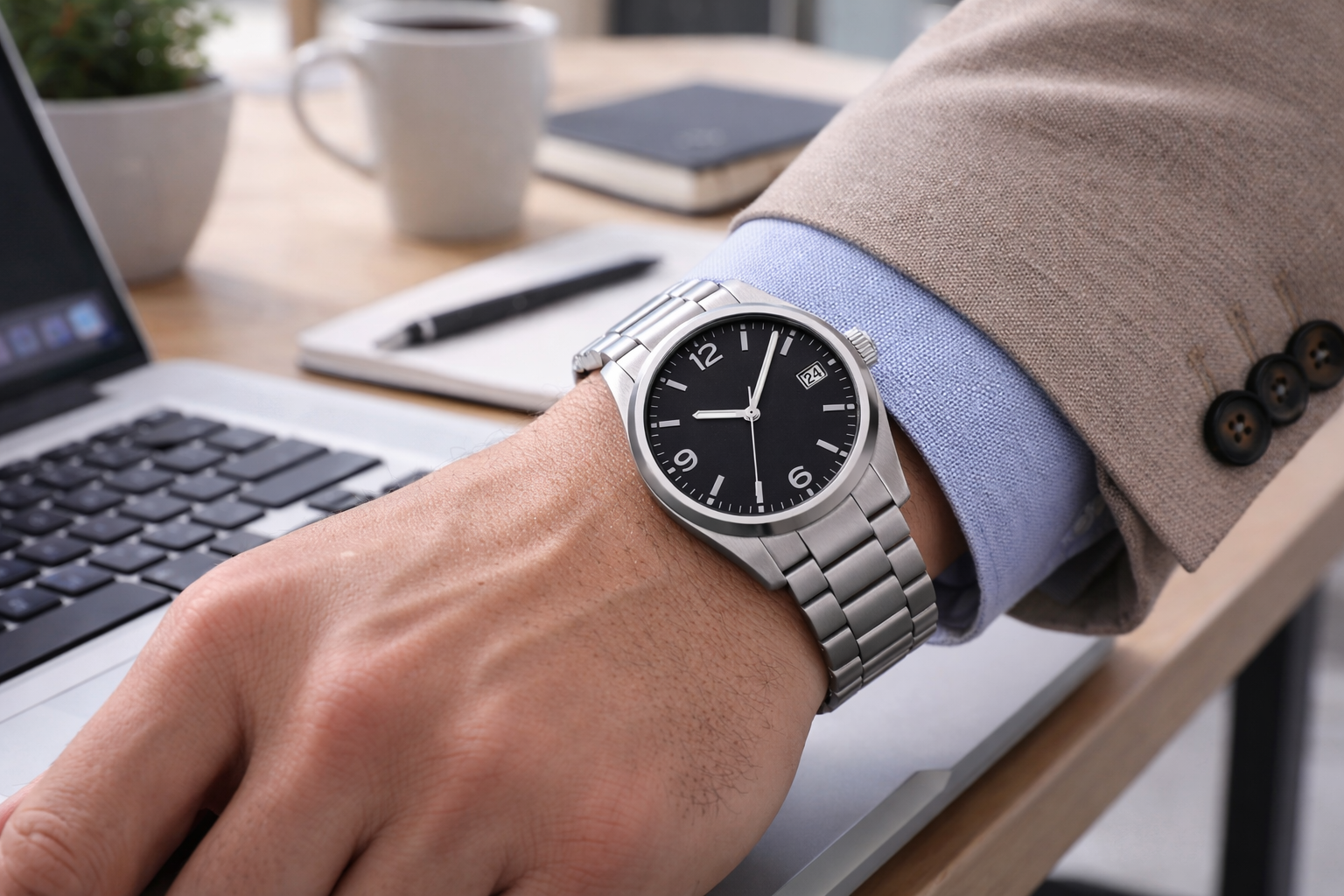
The best-looking outfits usually feel intentional, but not forced.
That means the watch should support the outfit without looking like it was chosen only to satisfy a rule. When the shoes, belt, watch, and clothing all feel calm and balanced, the result looks better than an outfit that is technically matched but too stiff or too obvious.
Real-life example
A person wears a steel watch with dark trousers, a neutral jacket, and brown shoes. Nothing is overly matched, but the whole outfit feels clean and mature. Another person perfectly matches strap, belt, and shoes, but the watch style feels too formal for the rest of the outfit, making the whole look less natural.
That is the real lesson: coordination matters, but ease matters too.
What to check
- Does the outfit feel naturally balanced?
- Is the watch helping the overall impression?
- Are you dressing for visual harmony instead of rigid matching?
This also connects well with One Watch or Several? Which Choice Makes More Sense for Everyday Life because one reason people own multiple watches is to handle different dress levels more easily.
What Buyers Often Get Wrong
Many buyers assume:
- the watch must always match both shoes and belt
- exact leather color matching is essential
- matching automatically makes the outfit better
But in real life, a watch usually looks best when it fits the outfit’s style, formality, and overall balance.
That is why approximate harmony often works better than strict matching.
Who Should Care More About Matching?
Matching matters more if you:
- wear leather-strap watches often
- dress formally for work
- wear tailored outfits regularly
- prefer classic menswear rules
- want a more polished traditional look
For these buyers, matching can make a visible difference.
Who Can Be More Relaxed About It?
You can be more flexible if you:
- wear steel bracelet watches often
- dress mostly smart casual or casual
- prefer practical daily versatility
- want one watch that works with many outfits
- do not dress by strict traditional rules
For these buyers, overall balance usually matters more than exact matching.
Final Thoughts
So, should your everyday watch match your shoes or belt?
Sometimes, yes — but not always.
If your watch is on leather and your outfit is on the smarter side, matching loosely with your shoes or belt can help the whole look feel more polished. But for everyday wear, exact matching is usually less important than whether the watch fits the outfit’s overall style and formality. Metal bracelet watches are especially easy because they usually work as a neutral.
In the end, what actually looks better is not perfect matching. It is a watch that feels naturally right with the rest of what you are wearing.
FAQ
1. Should a watch always match your shoes and belt?
No. It can help in smarter outfits, especially with leather straps, but it is not always necessary for everyday wear.
2. Does a metal bracelet watch need to match shoes?
Usually not. Steel bracelet watches are often neutral enough to work with many different shoes and outfits.
3. Should a brown leather watch strap match brown shoes?
In many cases, yes, or at least stay in a similar color family. It usually looks cleaner when the tones feel related.
4. Is exact matching necessary?
Not usually. Close harmony is often enough, especially in normal daily wear.
5. Does black make watch styling easier?
Often, yes. Black usually feels easier to pair because it looks controlled and versatile.
6. What matters more than matching?
Overall balance, formality level, watch size, strap type, and how natural the whole outfit feels usually matter more.
7. What is the biggest mistake buyers make here?
A common mistake is focusing too much on exact matching while ignoring whether the watch actually fits the outfit’s style.
